Mastering Apex Trader Funding: A 2026 Guide to the 30% Rules and Guaranteed Payouts
Stop the "gut punch" of a denied payout request from Apex Trader Funding by mastering the regulations that catch many traders off guard. This comprehensive guide explores the two critical 30% Rules—Consistency and Negative P&L—that determine whether you get paid or get denied.
Navigating the world of prop trading can be a "uniquely painful experience" when a hard-earned payout request is suddenly denied. For many traders using Apex Trader Funding, the culprit isn't a lack of profit, but a misunderstanding of the firm's specific regulations.
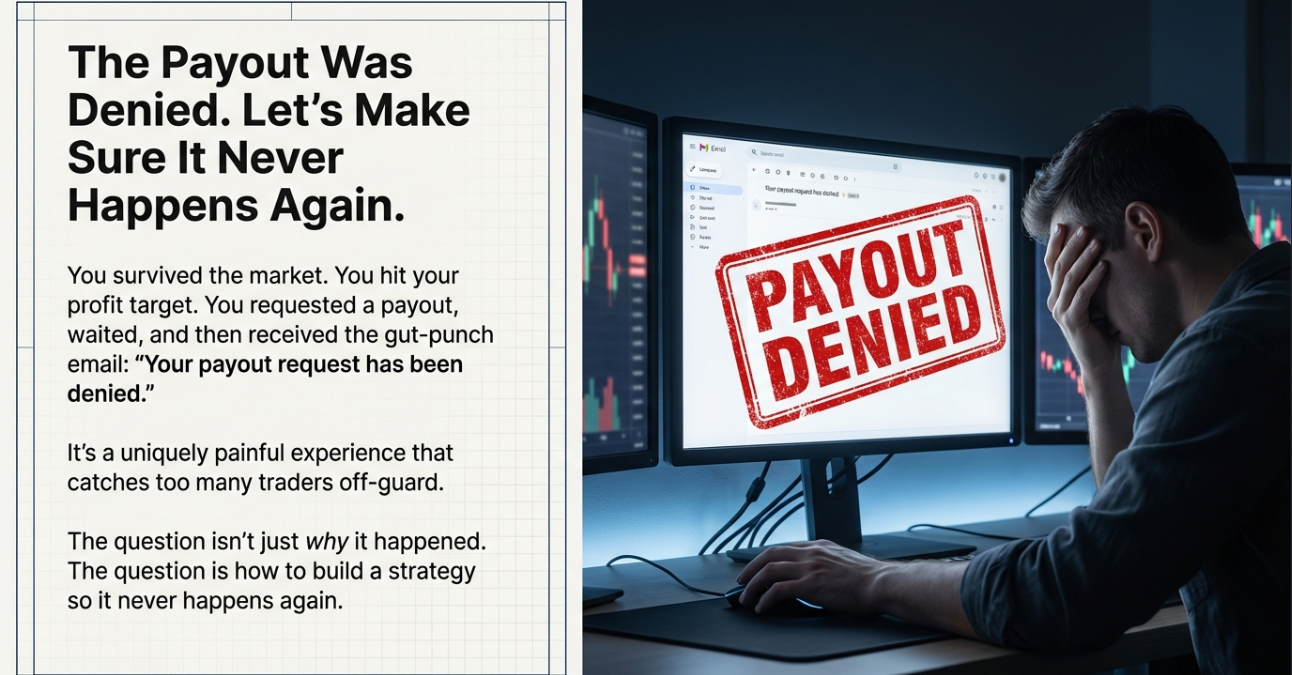
To move from "denied" to "approved," you must master the two most confusing requirements: the 30% Consistency Rule and the 30% Negative P&L Rule.
The Basics: Beyond the Evaluation
Before diving into the complex math, remember that Apex requires you to follow several foundational rules to remain eligible for payouts:
• Minimum Trading Days: You must execute at least one trade on eight separate days (they do not need to be consecutive).
• Market Close: All positions must be closed by 5:00 p.m. ET; no live positions can be held overnight.
• No Hedging: You cannot take opposite positions (long and short) on the same contract across multiple performance accounts.
1. The 30% Consistency Rule Explained
The most common reason for a "gut punch" denial email is the 30% Consistency Rule. This rule dictates that no single trading day should account for more than 30% of your total profit balance at the time of your payout request.
The Math: If you have a $50,000 account and grow it to $60,000, your total net profit is 10,000.To stay compliant, no single day can have a net profit exceeding 3,000 ($10,000 x 0.3).
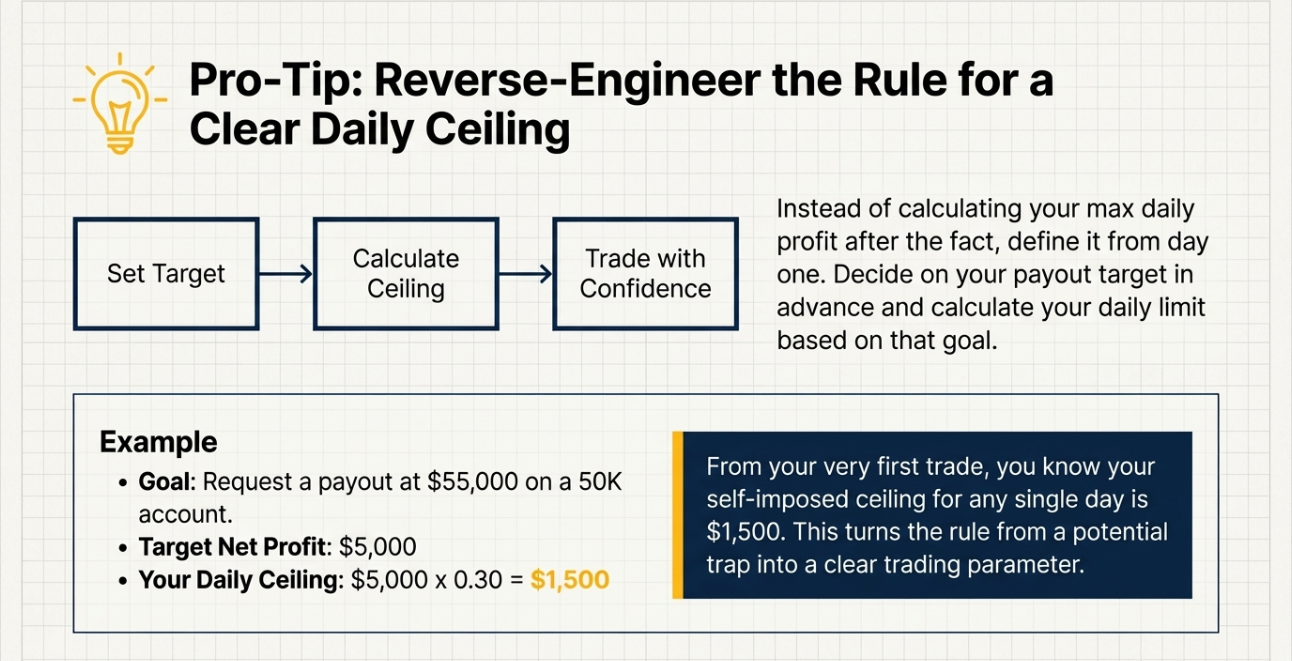
Pro Strategy: Reverse Engineering To avoid accidental violations, many successful traders "reverse engineer" their goals. If you want to request a payout at a specific profit target, multiply that target by 30% to create a self-imposed daily profit ceiling. For example, if your goal is $5,000 in total profit, ensure you never exceed $1,500 in a single day.
2. The 30% Negative P&L (Drawdown) Rule
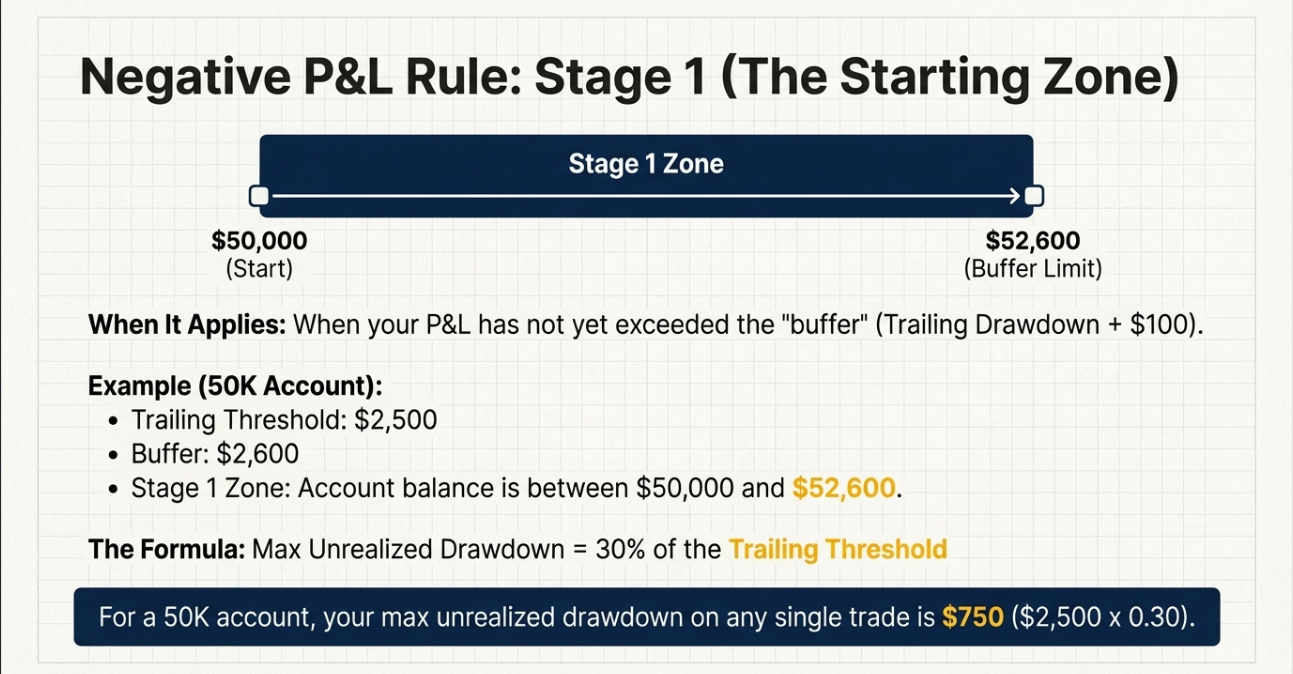
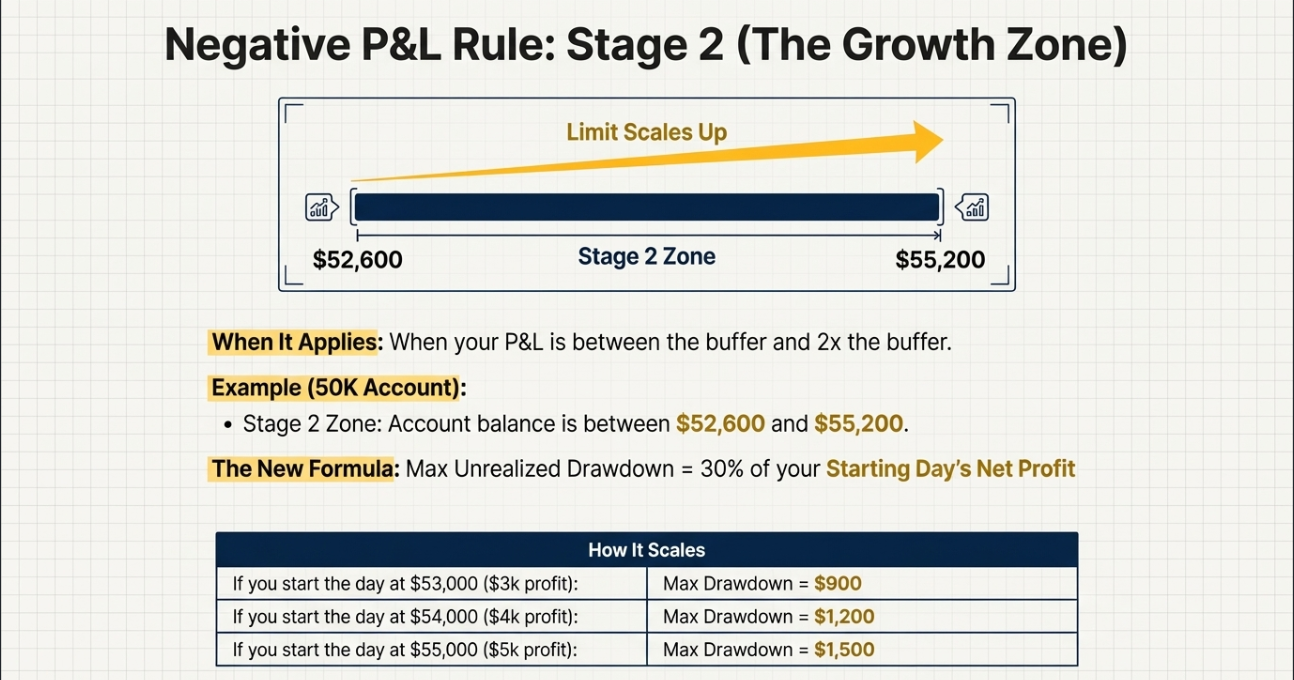
While the consistency rule looks at your gains, this rule monitors your unrealized drawdown during live trades. This is more complex because it scales as your account grows through three stages:
• Stage 1 (Below the Buffer): If your account is fresh and hasn't reached the "safety net" (e.g., 52,600 for a 50k account),your unrealized drawdown cannot exceed 30. For a 50k account, this limit is typically 750.
• Stage 2 (Between Buffer and 2x Buffer): Once you have moderate profit, your max unrealized drawdown becomes 30% of your starting profit balance. If you start a day with $3,000 in profit, your limit is $900.
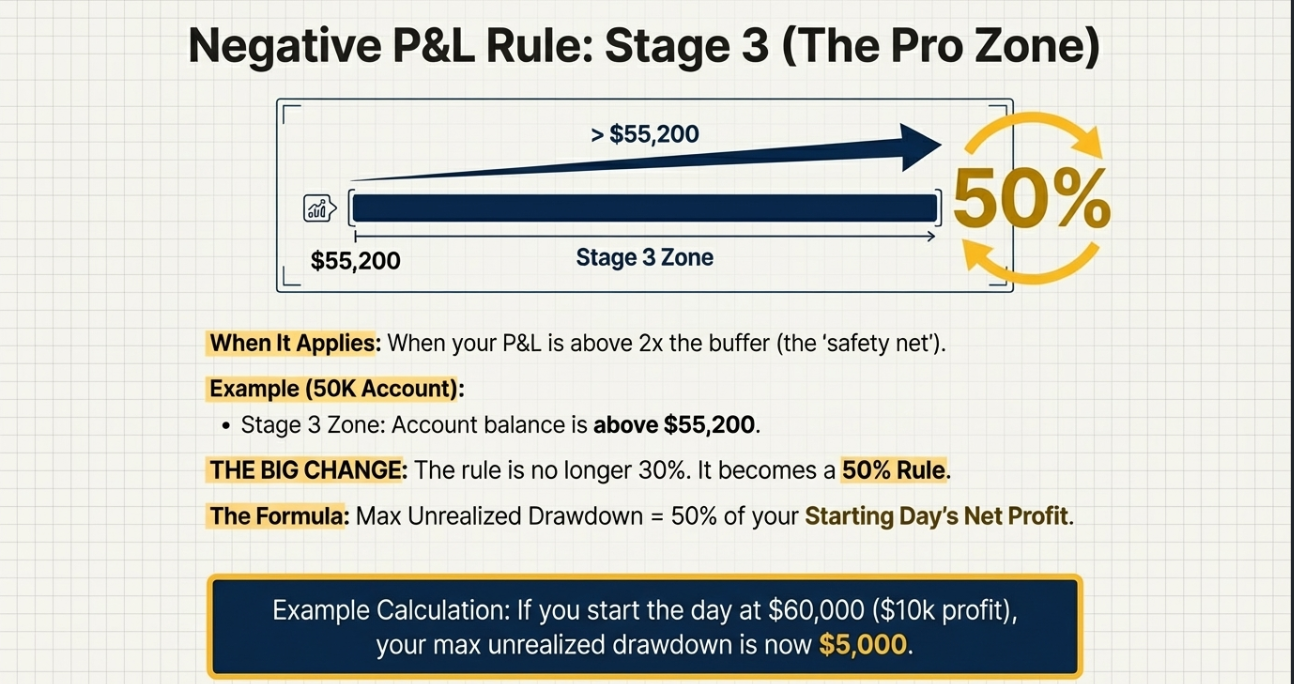
• Stage 3 (Above 2x Buffer): For highly successful accounts (e.g., over $5,200 profit on a 50k account), the rule relaxes. You are allowed an unrealized drawdown of up to 50% of your net gain.
What Happens if You Break a Rule?
The good news is that breaking these 30% rules does not result in losing your account. Instead, Apex will deny your current payout request and ask you to trade another cycle. They want to see that you can "balloon" your total profit so that the "lucky" day no longer accounts for more than 30% of your total balance.
Why Does Apex Have These Rules?
These rules exist to filter out gamblers and reward consistent progress. By preventing one lucky trade from carrying an entire account, Apex ensures the longevity of their business model and the success of disciplined traders.
--------------------------------------------------------------------------------
Analogy for Your Readers: Think of the 30% Consistency Rule like a marathon pace. Apex doesn't want to see you sprint at Olympic speeds for one mile and then crawl the rest; they want to see you maintain a steady, sustainable speed throughout the entire race to prove you have the endurance to handle their capital long-term.